
Build a Reliable AI Image Combiner Workflow
A practical Ez Picture workflow for choosing source images, writing prompts, and iterating with multiple AI models.
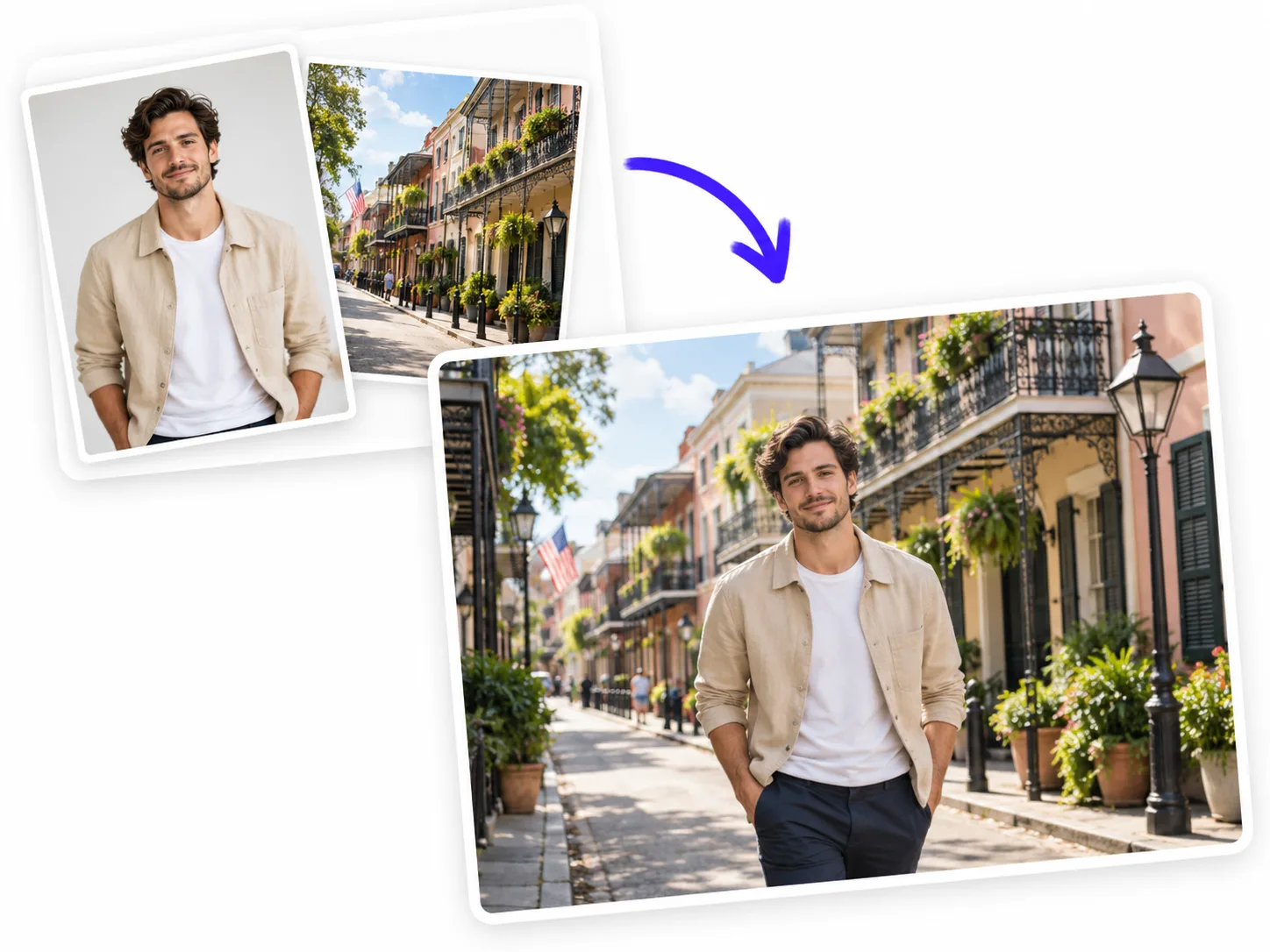
AI image combining is more than placing several pictures into one frame. A reliable workflow treats every uploaded image as a source with a clear role: a person, scene, product, outfit, food item, or interior detail. The model can then focus on blending, lighting, scale, and composition.
Give each image a job
Before writing the prompt, separate your inputs into three groups:
- Subject images: the person, product, or object that should lead the composition.
- Scene images: the environment, spatial context, and atmosphere.
- Style images: the lighting, color mood, camera feel, or visual finish.
This removes ambiguity. When the model understands what each image contributes, the result is easier to control.
Say what to keep and what to change
A strong prompt usually has two parts: what must stay intact, and what should be transformed. For example:
Preserve the face and outfit from the first image, place the person naturally inside the valley scene from the second image, and adjust the whole image to warm golden backlight at dusk.
This is more reliable than “combine these two images” because it defines the subject, background, and lighting relationship.
Use multiple models for different stages
Image combining, local edits, and final enhancement do not always need the same model. You can use one model to create the main composite, another to fix details, and a final model that performs better for products, portraits, or landscapes.
Ez Picture is designed to keep those steps in one workspace, so creators do not need to move assets between disconnected tools.
Reuse the input structure that worked
When a composite works well, save more than the final image. Keep the image order and prompt structure. Next time, swap only the subject or the scene to produce another result in the same style.
That is how AI creation moves from random exploration to a repeatable production workflow.